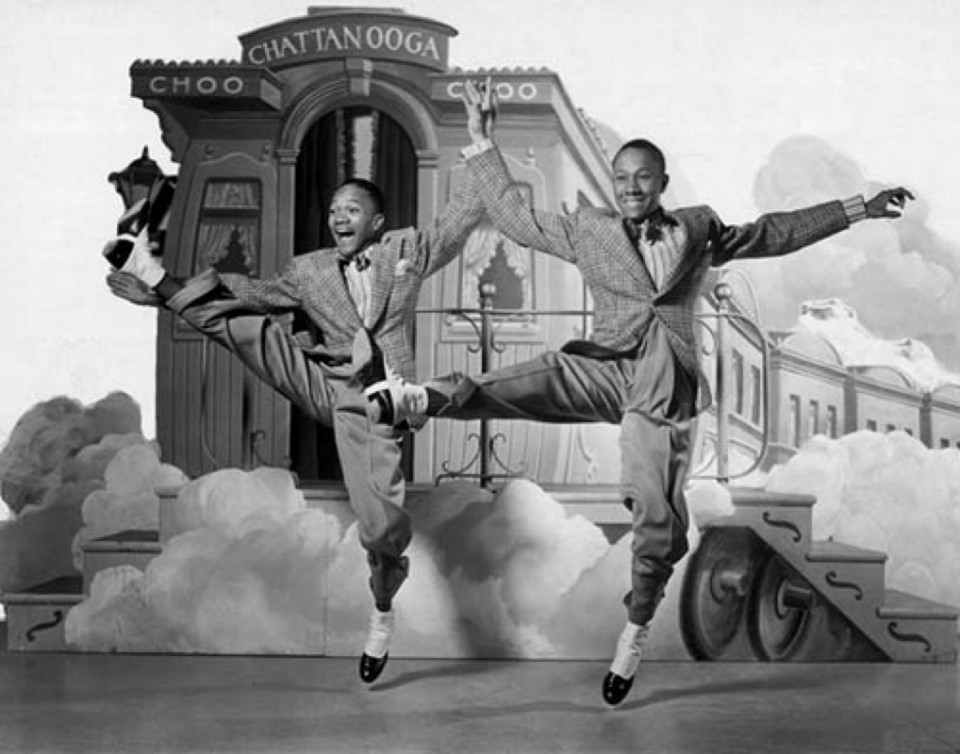
The air smells of face powder and bootleg gin. The piano strikes up, the trumpet laughs, a girl with her hair cropped at the nape lifts her hem three inches. Knees cross, open, brush against each other. Feet kick backwards, arms row through the smoke. Pearls spin around her neck and slap against the night. At the back of the room, someone faints. Someone else calls for an encore.
The step comes from an orphanage courtyard. At the end of the nineteenth century, Reverend Daniel Joseph Jenkins, born into slavery, opens a home in Charleston for abandoned children. To support it, he puts together a band. He dresses the boys in cast-off uniforms from Citadel cadets: sleeves too long, brass buttons, second-hand shoes. The boys play in the streets, and someone in front of them starts to dance. Then come Buffalo, St. Louis, Paris, Berlin, Rome. The music raises money, but in the meantime, it carries the world away.
The name was born in the streets, or so the story goes. In Harlem, someone calls out to a boy from the orphanage: “Hey, Charleston, show us your dance.” A few years later, pianist James P. Johnson hears that rhythm again in a basement in San Juan Hill, where people dance until dawn. He watches, sits down at the piano, and brings that beat into his left hand. Ten years later, in 1923, it enters the musical Runnin’ Wild, and New York loses its composure.
Within a few months, skirts grow shorter, stockings are rolled down below the knee, and the corset is banished to the back of the wardrobe. Girls dance on their own, without asking any gentleman for permission. In Texas, a teenager named Ginger Rogers wins a Charleston contest. The prize is a place in vaudeville. One October evening, Josephine Baker takes the stage at the Théâtre des Champs-Élysées. She is very young, her knees snap, her smile is crooked. Europe holds its breath for a moment, then starts dancing too.
The scandal arrives right on cue. At three in the morning on July 4, 1925, in Boston, a musician at the Pickwick Club looks up and asks if the lights are dimming. A veil of sand falls from the ceiling. Then the Beach Street venue crumples: forty-four people die. Newspapers blame the dance and dub it the “Dance of Death.” The trial tells a different story: excavation work for a garage next door, a fire, and a pillar that one expert describes as the most rotten concrete of his career. All the defendants are acquitted.
The dance halls do not stop for a minute. Even discreet signs bearing the initials PCQ, “Please Charleston Quietly,” begin to appear, but beneath those letters, dancers keep kicking. Outside, it rains. Inside, someone knocks over a glass, the needle scratches the record and starts again.
No one obeys anyone.
The fire dies out on its own, and all because of hemlines. A flatter Charleston emerges, without the kicks, better suited to crowded dance floors. The Black Bottom softens it, the Lindy Hop swallows it whole, evening dresses return to brushing the floor, and knees disappear beneath the fabric once again. Then come the Wall Street Crash and the breadlines. The step slips into the quickstep and stays there, disguised as good manners.
Those who caused a scandal kept carrying the dance with them. One October evening, Josephine Baker leaves the theatre and never looks back: France becomes her home, and almost a century later, the Panthéon opens its doors to the girl who once kicked her legs on stage. James P. Johnson continues to write music, while his Charleston travels the world, whistled on the streets by people who will never know his name.
Meanwhile, the Charleston courtyard never stops playing. From those too-long sleeves emerges a trumpeter who climbs to notes where the air grows thin, and a guitarist who keeps time for Count Basie for forty years without ever being heard once. The reverend passes around his hat to raise enough for dinner, and inside that hat, an orchestra grows.
Today, all it takes is a single note of hot jazz. Somewhere, a woman sets down her glass, crosses her legs, smiles. The last century passes her by, winks at her, and the dancing goes on.