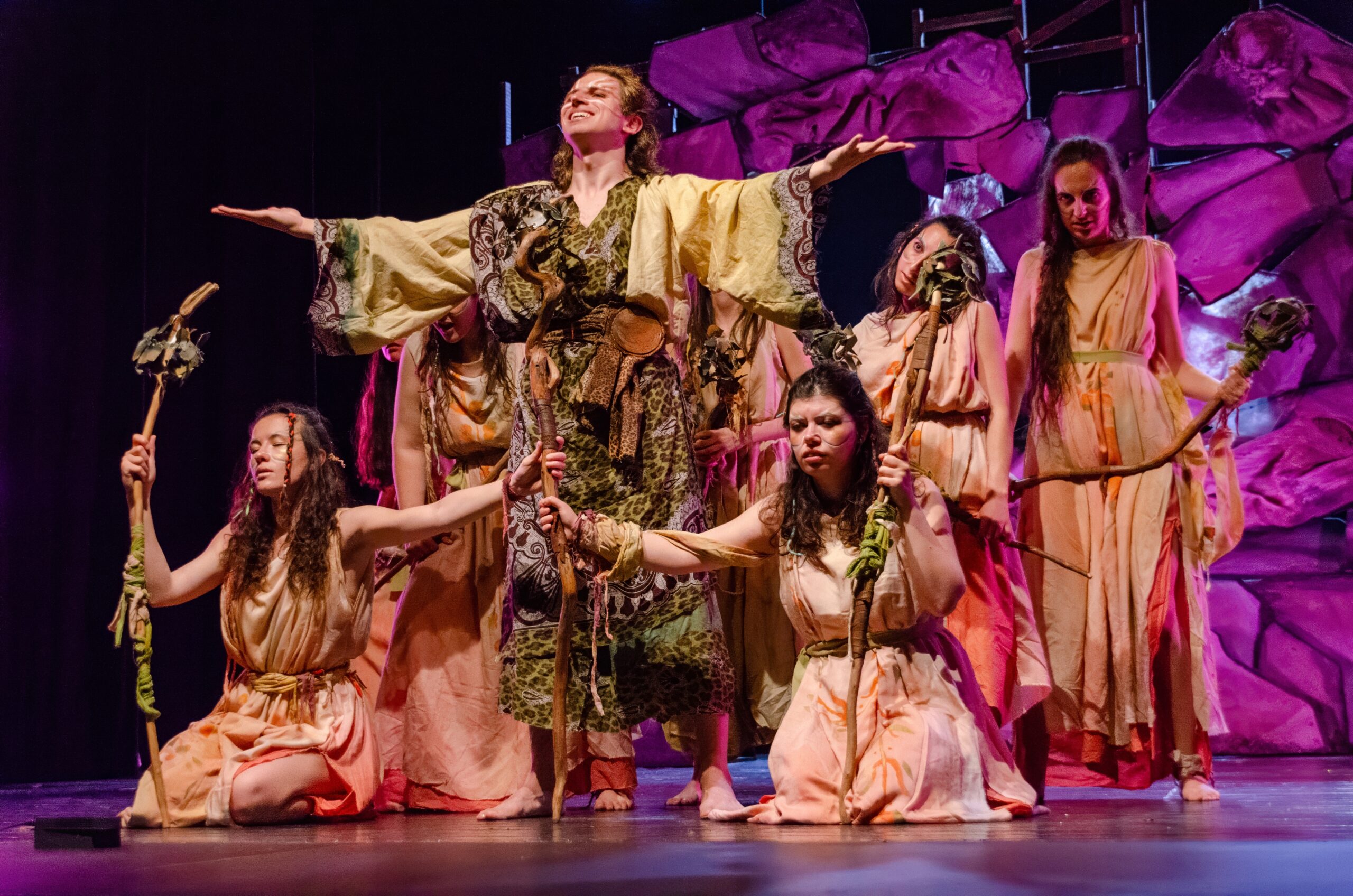
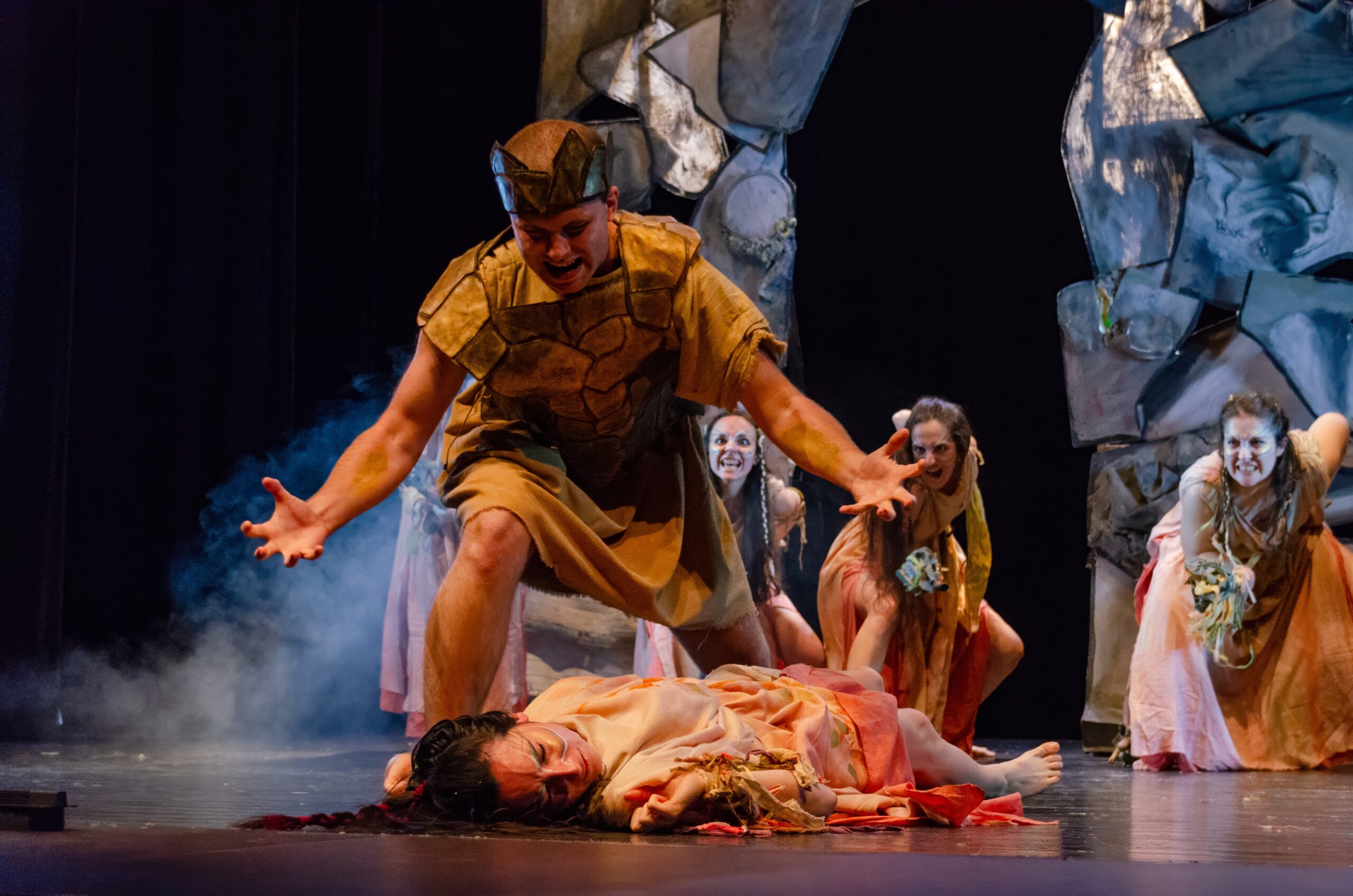
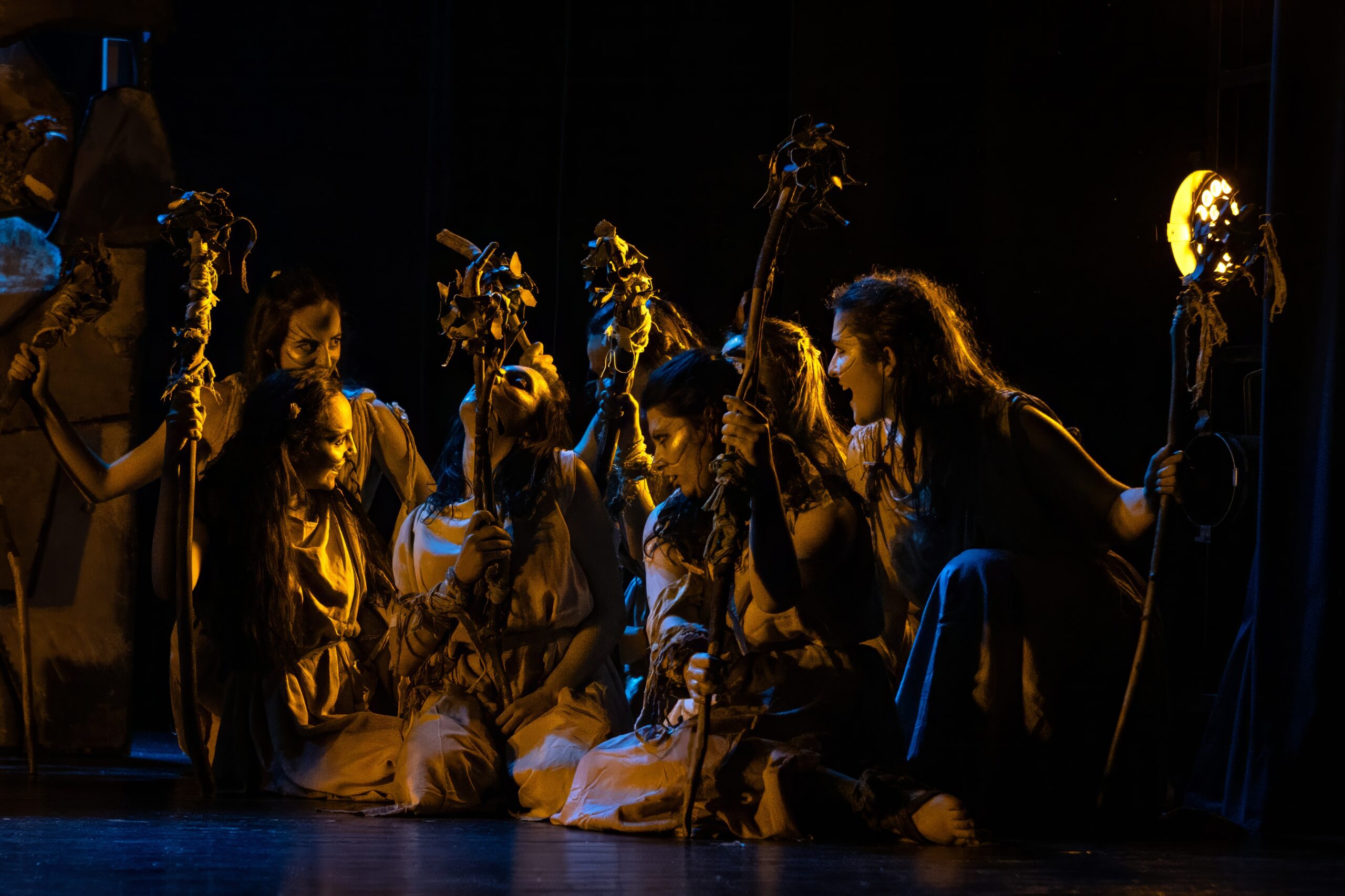
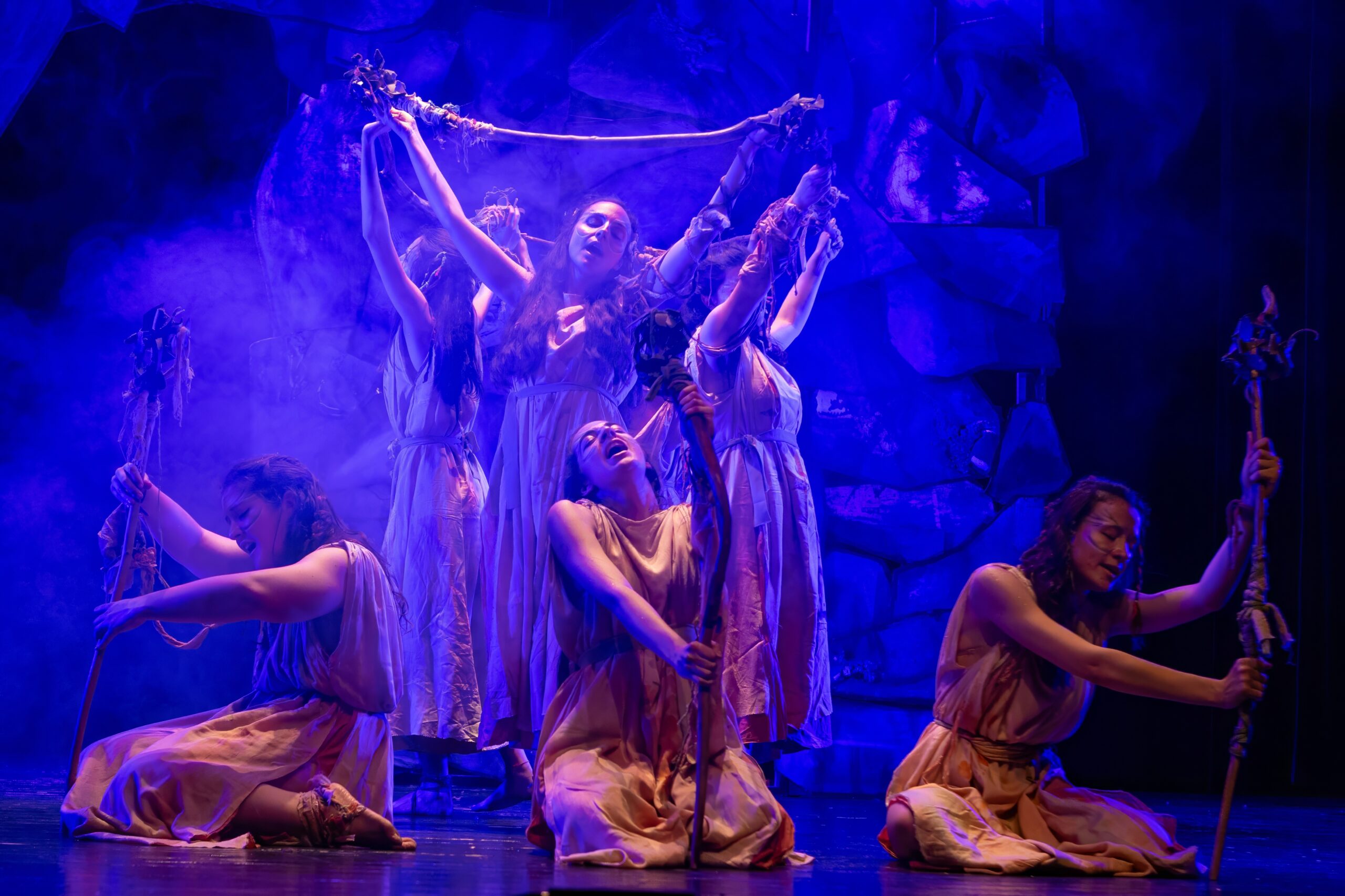
An ancient tragedy brought to life, powerful and surprisingly contemporary: at the Osoppo Theatre Valentina Cortese, a company of young performers captivates audiences with an intense, visionary performance that blends unease, wonder and tragicomic moments.
The Bacchae: the living power of ancient tragedy
Some performances are meant to be watched, others to be listened to, and still others to be discussed. Then there are those that achieve something far rarer: captivating audiences, surprising them, moving them and leaving them speechless. This is precisely what happens with Euripides’ Bacchae, brought to life by Kerkís. Teatro Antico In Scena, a company that proves how the talent of young performers can become an extraordinary theatrical experience. On the stage of Milan’s Osoppo Theatre Valentina Cortese, from 14 to 16 October 2026, Euripides’ tragedy rediscovered its full, explosive power. The result is a performance that enchants audiences, restoring to ancient theatre the vitality that too often risks remaining trapped between the pages of books.
Young talents, an energy that captivates
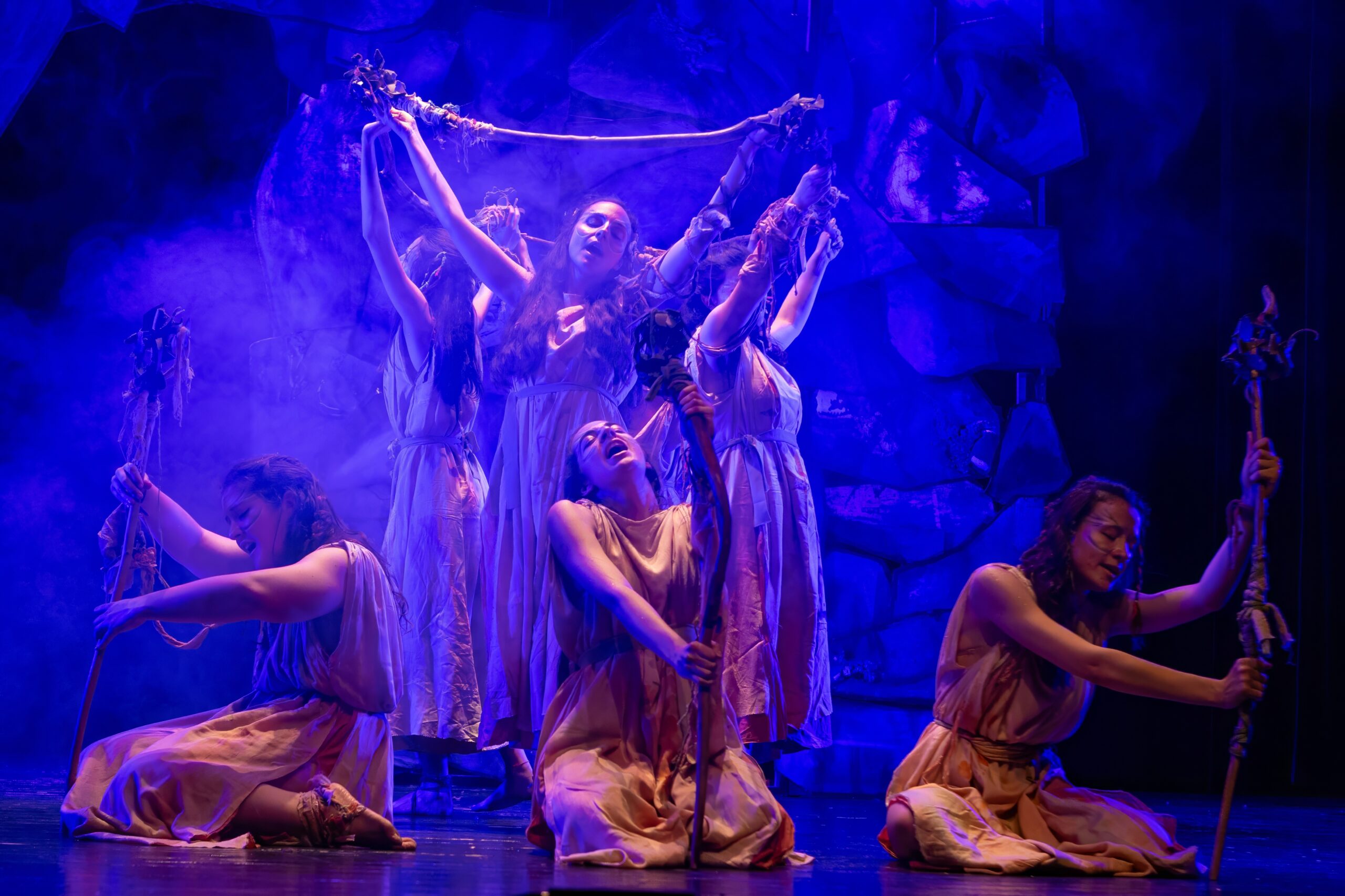
At the heart of the performance is a company of young performers who tackle a complex and immensely powerful text with a remarkable stage presence. This is not simply a reinterpretation of a classic, but a living encounter between generations and sensibilities, in which youthful enthusiasm translates into energy and expressive power. The performers are exceptional in bringing to life a story where reason clashes with the irrational, power seeks to dominate what it cannot understand, and the divine bursts into everyday life, turning it upside down. Each character helps build a vibrant theatrical world, charged with tension, contrasts and sudden surges of emotion. What stands out above all is the company’s ability to draw audiences into the story, never allowing them to drift into the detachment often associated with classical tragedy. On the contrary, Euripides feels immediate, tangible and even startlingly relevant.
A tragedy that surprises, unsettles and even brings a smile to your face
The Bacchae is a tragedy of excess, contradictions and terrible consequences. Yet its dramatic tension intertwines with moments of a tragicomic nature, surprising the audience and defying expectations without ever diminishing the story’s depth. It is precisely this balance that makes the experience so compelling: audiences are drawn into a continuous interplay of wonder and unease, where contrasts heighten the tragedy’s emotional power. There are moments that bring a smile, moments that sweep you along, and others that leave you suspended in anticipation. Then, as the story hurtles towards its most painful conclusion, the full brutality of a tale that offers no easy consolation comes to the fore. At the centre lies the clash between Pentheus, King of Thebes, and Dionysus, son of Zeus and Semele. The king refuses to acknowledge the god’s divine nature and attempts to suppress his worship. Yet what Pentheus perceives as disorder cannot simply be abolished by decree. Dionysus exposes the fragility of human power, leading the city into a spiral of madness and destruction. The tragedy unfolds before the audience’s eyes, reminding us how dangerous the presumption of controlling everything can be, and how fragile the boundary between rationality, arrogance and the loss of oneself truly is.
The power of ritual, the force of words
What makes this revival even more distinctive is its exploration of language and sound through the chorus of the Bacchae. The original translation by Ezio Savino, revised by Elisabetta Matelli, is reinterpreted through the mystical language of the laude of Jacopone da Todi, restoring an archaic, sacred dimension to the choral singing. Words become more than a vehicle for storytelling: they become rhythm itself. The chorus thus takes on a presence that evokes ancient ritual, guiding the audience into a world where nature and ecstasy stand in opposition to order and restraint. The direction by Christian Poggioni and the revival by Eri Çakalli work together to shape a vision that highlights the contradictions within the text and brings its surprising contemporary relevance to the fore. On one side stand the Asian Bacchae, devoted to Dionysus and the rhythms of nature; on the other, the Theban women, swept away by madness on Mount Cithaeron, an extreme punishment for rejecting the divine. The result is a powerful contrast that runs throughout the performance, with the chorus emerging as one of its most effective expressive forces.
Kerkís, where youthful passion meets the grandeur of the classics
Behind this experience lies the work of Kerkís. Teatro Antico In Scena, a non-profit social promotion association active since 2011 and established in connection with the Università Cattolica del Sacro Cuore in Milan. Its mission is clear: to bring research, university education and stage practice together, placing the ancient dramatic heritage at the heart of a dialogue with contemporary audiences. The involvement of young actresses and actors (all under 35), students and theatre professionals is not merely an artistic choice, but a cultural investment. It means investing in new generations, offering them tangible opportunities for growth and demonstrating that the classics do not belong exclusively to the past. They can still speak to the present, challenge our certainties and, why not, stir genuine emotions. The Bacchae is a shining example of this vision. The company’s work restores dignity and vitality to a demanding text, embracing experimentation without shying away from complexity. This is theatre as research, but also as an opportunity for connection and discovery.
A round of applause for the courage to move audiences
In a cultural landscape that needs new voices and fresh opportunities, experiences like this deserve recognition and enthusiasm. They demonstrate that young talents have so much to offer and that classical culture, when brought to life by performers who truly understand how to make it resonate, is anything but distant or disconnected from the present. The company moves, amazes and enchants its audience, demonstrating an artistic maturity that deserves to be recognised and encouraged. These young performers deserve a heartfelt and enthusiastic round of applause for their talent, courage and dedication, and for reminding us, through a truly powerful performance, that theatre can still ignite something deep within us. They also show us that the future of the stage can be truly exciting when it is in the hands of performers ready to challenge themselves, give their all and pursue their craft with passion.
Information about the performance
Euripides’ Bacchae was performed on 14 and 15 October 2026 at 8:30 pm, and on 16 October at 10:30 am and 8:30 pm, at the Osoppo Theatre Valentina Cortese, located at Via Osoppo 2, Milan. The performances on 15 and 16 October were part of Milano Teatro City, the cultural programme promoted by the Municipality of Milan.
Direction: Christian Poggioni
Dramaturgical direction: Elisabetta Matelli
Revival direction: Eri Çakalli
Traduction: Elisabetta Matelli, Ezio Savino
- With: Andrea Antonioli, Roberto Bernasconi, Benedetta Drago, Matteo Fasolini, Francesca Ferrari, Tancredi Greco, Giada Kogoj, Madalina Lupascu, Giulia Maria Marino, Elisa Novati, Giacomo Lisoni, Francesca Redaelli, Arianna Sangiuliano e Lisa Zanzottera.
- Running time: 90 minutes, no interval
For information about Kerkís Theatre visit the official website!