

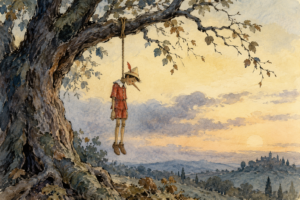
Once upon a time, there was fear
When fairy tales did not promise that everything would turn



Lake Geneva, Wisconsin, 1968. In a small town of just five thousand inhabitants, a man named Ernest Gary Gygax organizes a convention dedicated to wargames, strategy board games that simulate historical military conflicts, such as the Napoleonic campaigns or the two World Wars, on a map that serves as a battlefield where players deploy their miniature armies.
Originally developed in Prussia in the second half of the 18th century as a strategic decision-making tool for military campaigns, these simulations soon moved beyond the barracks to become a game that promised to be an evolution of the much older and better-known game of chess.
A milestone in this regard was H. G. Wells’s 1913 book Little Wars, considered the first set of three-dimensional wargame rules designed for a general audience. The rulebook introduced the game as follows: «Little Wars: a game for boys aged twelve to one hundred and fifty, and for that particular kind of clever girl who enjoys boys’ games and books. Quite a different era, to say the least.

Let’s go back to 1971, when Gary Gygax, noticing that players were beginning to grow tired of the usual historical and realistic settings, mostly set in the medieval period, published Chainmail with Jeff Perren. Gygax’s brilliant idea was to introduce fantasy elements such as dragons, magical creatures, men with superhuman powers and spells. These were the years of Conan the Barbarian (Robert E. Howard), The Lord of the Rings (J. R. R. Tolkien) and Elric of Melniboné (Michael Moorcock), when fantasy, although not yet defined by a clear set of conventions, was experiencing a golden age of extraordinary and eclectic experimentation and rediscovery. The epic grandeur of Tolkien’s mythology merged with the dark violence of Robert E. Howard’s Sword and Sorcery and the decadent philosophy of Michael Moorcock broke saway from the classic dualism between Good and Evil, introducing the eternal and unstable conflict between Order and Chaos. This was a visceral, psychedelic and untamed imaginary world, shaped by the painterly illustrations of renowned fantasy artist Frank Frazetta, the alien atmospheres of Jack Vance’s Science Fantasy and the forgotten corridors of ancient ruins and decaying cities. A raw and fascinating universe, waiting to be discovered firsthand around a gaming table spezzava il classico dualismo tra Bene e Male per introdurre il perenne e instabile conflitto tra Ordine e Caos. Era un immaginario viscerale, psichedelico e selvaggio, nutrito dalle illustrazioni pittoriche del celebre illustratore fantasy Frank Frazetta, dalle atmosfere aliene dellaScience Fantasydi Jack Vance e dai corridoi dimenticati di rovine e città decadenti. Un universo grezzo e affascinante che attendeva solo di essere scoperto in prima persona attorno a un tavolo.

This is where Dave Arneson enters the picture, who would become the second father of Dungeons & Dragons alongside Gygax. Like Gygax, he had grown tired of the rigidity of historical simulations. Fascinated by Gygax’s work on Chainmail, he created Blackmoor, a heroic medieval fantasy setting filled with magic. Instead of having entire battalions of cardboard pieces or miniatures clash, as in traditional wargames, Arneson introduced a new concept: each participant controlled a single character, an alter ego, or the player’s narrative avatar, through which imagination takes shape and interacts with the rules and the world.
Rather than fighting on an open battlefield, the action moved into the underground labyrinths of Blackmoor Castle. Enthusiastic about this work and the way the game had evolved from simple tactical military decisions into an immersive setting, a player named David Megarry suggested that Arneson build the entire adventure around dungeons, (meaning underground prisons).

From the combined efforts of Gygax and Arneson, after years of testing and fine-tuning, The Fantasy Game was born, the rulebook that would eventually become Dungeons & Dragons in 1974. It was Gary Gygax’s daughter who came up with the name of what would go on to become the world’s most famous role-playing game. She simply liked the way the two words, Dungeons and Dragons, sounded together. A child’s simplicity can sometimes be pure genius. And the name was perfect, bringing together the setting of secret castle dungeons, with their aura of mystery and discovery, and the fantasy imagery embodied by dragons.

While Dave Arneson provided the conceptual insight and the setting, inventing the idea of controlling a single hero, (as already mentioned, an alter ego) in a fantasy world and moving the action underground, into dungeons, while also introducing elements such as Armor Class and Hit Points, Gary Gygax, on the other hand, took these raw ideas and integrated them with the combat system from Chainmail. He structured and codified the game rules, introducing concepts such as Experience Points and Levels, and bringing in the idea of a long-running Campaign: an adventure spanning multiple gaming sessions, unlike traditional wargames, which typically lasted just a single afternoon.
After developing the concept and structuring the rules, Gary Gygax ran into a wall: the publishing industry of the time. No major publisher was willing to invest in the project, considering a game without a board and without a clear-cut, mathematically defined victory condition, such as conquering a territory or defeating the opposing army, simply unthinkable.
Dungeons & Dragons, also known simply as D&D, was based almost entirely on imagination. Instead of using a game board, players drew the map themselves as they gradually discovered new areas. There was no final victory or ultimate goal marking the end of the game. Moreover, its strong creative component, managed by a human referee, made the rules flexible and free from the rigid predictability the industry was accustomed to. Publishers simply couldn’t understand how a game could be sold when participants didn’t compete against one another to win, but instead cooperated under the guidance of a storyteller. Nor could they conceive of a product without a predefined ending.
Gary Gygax, however, refused to give up and decided to establish his own publishing company to print the rulebook and sell it independently. To turn this ambition into reality, in October 1973 he joined forces with his childhood friend Don Kaye, founding the publishing house Tactical Studies Rules, better known as TSREach invested an initial capital of just one thousand dollars, money that Kaye managed to raise even by cashing in a life insurance policy. Despite this, their initial funds proved insufficient to complete the printing process, so they brought in a third partner, Brian Blume, whose financial contribution proved crucial in getting production underway.
Arneson and Megarry, respectively the co-creator of D&D and the inventor of the dungeon concept, were initially hired by TSR as employees, since they lacked the funds to join as partners. Megarry soon withdrew, while Arneson was gradually sidelined due to management and financial disagreements, eventually becoming embroiled in a long and exhausting legal battle over rights and royalties.
And so, in January 1974, the first thousand copies of the famous Dungeons & Dragons White Box saw the light of day. The set consisted of three small bound booklets and a little wooden box, handmade in Gygax’s garage. First introduced to the public at the seventh Gen Con convention (the same event held in Lake Geneva), at a price of ten dollars, this initial batch of one thousand copies sold out within just a few months, thanks to an overwhelming word-of-mouth phenomenon that spread spontaneously among students on American university campuses.

So far, we have talked about rulebooks, characters, weapons and magic. Yet one hugely important element is still missing, the one that marks the true dividing line between the old wargames and the world of role-playing games: interpretation, or role-playing itself. Interestingly, role-playing did not emerge as a formal rule written by Gygax or Arneson and included in the rulebook. Rather, it was a spontaneous and almost inevitable evolution. As players increasingly found themselves controlling a single character instead of an entire army, they began to wonder not only what their character could do, but who they were, how they spoke, what they thought and how they would react when faced with danger.

In fact, D&D was not the first game to incorporate character interpretation into gameplay. As early as 1968, Dave Wesley’s Braunstein had introduced a new approach: participants no longer commanded only groups of soldiers, but instead took on individual roles, such as a mayor, a banker, a spy or a general. Each character had personal objectives and could engage in free-form verbal interactions, giving rise to schemes, negotiations and betrayals.
During the first half of the 20th century, the concept of role-playing was formalized by psychologist Jacob Levi Moreno in 1934, emerging from the need to move beyond passive psychoanalysis. Moreno developed and used psychodrama to help patients express their inner conflicts by acting out and staging their own experiences. To achieve this, the technique employed specific methods, such as “Role Reversal” to develop empathy, the “Double” to give voice to unexpressed thoughts, and the “Mirror” technique to observe one’s own behaviour from an outside perspective. The approach had two main objectives: on the one hand, to encourage catharsis and emotional release; on the other, to learn and experiment with new behaviours in a safe environment, helping individuals develop social skills and overcome anxieties or trauma.
When, during the 1950s and 1960s, the first creative history clubs and experimental wargaming groups, such as Braunstein and later Blackmoor, began assigning individual roles to players, they were unknowingly drawing on this very same psychological mechanism: the character’s mask is not there to hide behind, but to provide the freedom to act, choose and experiment.
While Moreno’s role-playing had clinical and therapeutic purposes, its recreational counterpart, associated with board games that were not yet called role-playing games, had and still has a liberating and immersive purpose. It allows players to become more deeply involved and enter a world different from their own, where they can leave behind social constructs and the ethical and moral constraints of everyday society, embracing shared personal freedom for the simple pleasure of playing.
During the 1970s, university campuses were the beating heart of youth movements, counterculture and the rediscovery of alternative literature. Young people were already deeply fascinated by Tolkien’s epic fantasy, the adventures of Conan the Barbarian and science fiction, finding in D&D the perfect gaming expression of their collective imagination. For a generation of students who often lived in university dormitories, the game became a powerful social ritual. All it took was a few sheets of paper, a pencil, some dice, a rulebook and plenty of imagination to transform a bare room into a bustling tavern or a dangerous underground dungeon, creating a strong sense of belonging and group identity.
However, following the counterculture, sexual revolution, anti-war protests and emergence of new religious movements and Eastern philosophies during the 1960s, American society in the 1970s and 1980s experienced a profound sense of disorientation. At the time, the authority of traditional institutions, including the family, the Church and the State, appeared increasingly weakened. Meanwhile, women’s growing participation in the workforce led to an expansion of nurseries and after-school care centres, generating a latent parental anxiety about “losing control” over their children’s upbringing. It was in this context that the so-called Moral Majority emerged and gained influence: a powerful coalition of evangelical, Protestant and conservative groups that viewed modernity as a spiritual battleground between good and evil and sought to restore traditional religious values in politics and everyday life. For the evangelical right, threats to young people were no longer abstract concepts, but real, tangible forces infiltrating popular culture.
.
American public opinion had already been deeply shaken by very real episodes involving cults and violence during the 1970s, such as the Manson Family murders in 1969 and the Jonestown massacre in 1978. The publication of sensationalist books with no scientific basis further fuelled the growing collective hysteria

In 1972, Mike Warnke published The Satan Seller, a purported autobiography of a former “high priest of Satan” who had converted to Christianity. The account was later debunked and revealed to be entirely fabricated. In 1980, Michelle Remembers was published, a book written by a psychiatrist and one of his patients, who claimed to have “recovered” repressed childhood memories of satanic ritual abuse through hypnosis.
Despite the complete lack of scientific or judicial evidence, these books turned the idea of a nationwide satanic conspiracy into something perceived as real by millions of people. This narrative was widely amplified by popular television programmes and sensationalist newspapers, which gave enormous visibility to supposed occult experts and fanatical figures without verifying the truthfulness of their claims. The combined effect of these publications and media coverage transformed an unfounded paranoia into a widespread climate of fear, as society searched for simple, tangible explanations for youth-related problems, depression and academic misconduct.
The most convenient scapegoats available at the time were undoubtedly hard rock and heavy metal music, along with a new game called Dungeons & Dragons, filled with terms such as demons, devils, invocations, rituals and curses. Suddenly, these words were no longer seen as products of fantasy, but as signs of something far more sinister lurking behind an apparently innocent game: satanic cults, brainwashing and human sacrifices.

The final straw came in August 1979, when James Dallas Egbert III, a sixteen-year-old student at Michigan State University suffering from depression and drug addiction, disappeared. He had hidden in the underground tunnels beneath the campus with the intention of taking his own life. The private investigator hired by his family, William Dear, unfamiliar with the nature of the game, suggested to the press that the boy had vanished while playing Dungeons & Dragons in the university’s underground tunnels and had fallen victim to a trance-like state or delusion induced by the game. The media quickly picked up the story, turning the investigator’s speculation into apparent fact. Although Egbert was found alive a month later (even though the story came to a tragic end the following year), the association between D&D, underground tunnels, madness and death had by then become deeply ingrained in the public imagination. In 1981, the story inspired the novel Mazes and Monsters, which was later adapted into a 1982 TV movie starring Tom Hanks, further reinforcing the idea that the game could cause players to lose touch with reality.

In 1982, Patricia Pulling, a Virginia mother whose son had taken his own life, became convinced that the cause of his suicide was a curse cast on the boy’s character during a D&D session at school. Pulling founded an organization called B.A.D.D. (Bothered About Dungeons & Dragons), through which she launched an intensive media campaign, claiming that D&D was an actual tool for satanic recruitment, rooted in occultism, witchcraft, black magic and demonology. She became a regular guest on high-profile television programmes, including 60 Minutes, spreading unfounded fears and providing law enforcement agencies and religious groups with “consultancy services” and informational materials.

Dungeons & Dragons thus became an ideal target for accusations of Satanism. After all, the game manuals were filled with evocative terminology and illustrations of infernal and monstrous creatures, elements that the most radical evangelical groups interpreted literally, becoming convinced that the manuals were actual compendiums of black magic. Added to this was the widespread concern surrounding the concept of role-playing: critics argued that adopting the “mask” of an alter ego and becoming fully immersed in a character could cause teenagers to lose touch with reality, leaving them vulnerable to brainwashing. This narrative was then widely disseminated through propaganda materials such as the famous Chick Tracts comic book pamphlets, in which the Dungeon Master was deliberately portrayed as an occult priest initiating young people into actual demonic cults.
Faced with an increasingly suffocating climate of boycotts involving schools, parishes and major retail chains, TSR was forced to adopt a drastic strategy of censorship and damage control. When the Second Edition of Advanced Dungeons & Dragons was published in 1989, the publisher removed controversial words such as “demon” and “devil” altogether, replacing them with entirely invented, neutral-sounding terms such as Tanar’ri and Baatezu. At the same time, the darkest illustrations were toned down and direct religious or esoteric references were kept to a minimum. Nevertheless, this smear campaign produced an unexpected boomerang effect: the frightening and relentless media coverage ultimately became an extraordinary source of unintended publicity, sparking the curiosity of countless young people at the time and drawing them into the game. Sales soared to unprecedented levels, exceeding 20 million copies distributed and translated into 22 languages by 1992.
In the 1980s, during the era of the Second Edition of Advanced D&D, TSR enjoyed a golden age of creativity, driven by the expansion of its fictional universe. This period saw the creation of settings that would become iconic in pop culture, including Forgotten Realms, Dragonlance, Ravenloft, Planescape and Dark Sun. These joined earlier settings that were already hugely popular among players, such as the famous Greyhawk, created by Gygax in 1972. This creative expansion was accompanied by the first landmark video game adaptations and a wealth of novels, including R.A. Salvatore’s celebrated books set in the Forgotten Realms, which chronicled the adventures of the legendary dark elf Drizzt Do’Urden.

However, this vast wealth of fictional worlds concealed serious management problems. After Gary Gygax was ousted in the mid-1980s following irreconcilable disagreements with the new management, led by Lorraine Williams, TSR made a series of disastrous business decisions. It fragmented the market with an excessive number of overlapping publications and suffered huge losses from unsold novels returned by bookstores. By 1997, the company was on the brink of bankruptcy, weighed down by debt and unable even to cover its printing costs.
The brand was saved by Wizards of the Coast, the publishing company led by Peter Adkison, which had conquered the market with Magic: The Gathering, the world’s first and most famous collectible card game, itself inspired by the fantasy universe of D&D. It was now 2000, and the Third Edition was released, followed by the 3.5 revision. The new edition unified the rules around the d20 system, which remains a favourite among many players and is often remembered as one of the game’s finest editions. The Open Game License was also introduced, allowing third-party publishers to create content compatible with the official rules. This sparked an explosion of creativity and established D&D as the shared standard across the entire industry. After toy giant Hasbro acquired Wizards of the Coast, the Fourth Edition, released in 2008, attempted to modernise the game by drawing inspiration from the mechanics of MMORPGs (Massively Multiplayer Online Role-Playing Games).which were hugely popular at the time. However, this approach ended up undermining the game’s narrative element, sparking widespread discontent among fans and paving the way for the emergence of Pathfinder, a competing ruleset born from the ashes of the Third Edition that challenged D&D’s dominance for several years.
Published in 2014, the Fifth Edition of D&D marked the beginning of a true renaissance for the game, bringing a breath of fresh air to its rules and manuals. Its development also benefited from the contributions of thousands of fans, who took part in playtesting and simulations. Recognising the importance of streamlined, accessible rules that put storytelling first, the Fifth Edition simplified tactical complexity to bring imagination back to the heart of the experience. The more accessible rules, combined with the possibility of organising online gaming sessions through modern video conferencing tools and dedicated virtual tabletop platforms, attracted millions of new players and rekindled the passion of many veterans. This revival coincided with a global cultural phenomenon, fuelled by the visibility gained through successful television series such as Stranger Things, which draws inspiration from D&D, and major video game hits such as Baldur’s Gate 3. This revival also extended to the growing popularity of live-streamed gaming sessions, broadcast on streaming platforms by groups of players and followed by millions of fans, as in the case of the American group Critical Role. This revival also extended to the growing popularity of live-streamed gaming sessions, broadcast on streaming platforms by groups of players and followed by millions of fans, as in the case of the American group Critical Role.

The cultural legacy of Dungeons & Dragons is immense and has indelibly shaped the entire landscape of modern entertainment, establishing itself as the invisible blueprint underpinning contemporary stories, media and narrative languages.
It codified the language of modern fantasy by bringing together elements of fantasy literature and making them familiar to a wider audience. A world inhabited by elves, dwarves, orcs and halflings, each with clearly defined traits and abilities, populated by magical creatures such as dragons, devils and demons, and built around the idea of magic as a resource governed by precise rules and limitations, has become the fundamental grammar on which virtually every fantasy writer draws today.
The game’s impact on video games, both Western and Eastern, has been even more profound, with many titles drawing on mechanics invented by Gygax and Arneson. Concepts now taken for granted by virtually every video game player, such as experience points, level progression, character stats and inventory management, were taken directly from the D&D rulebooks and incorporated into some of the earliest computer game masterpieces of the 1970s and 1980s. Without this foundation, iconic Western franchises such as The Elder Scrolls, Diablo, The Witcher and Baldur’s Gate might never have come into being. The same applies to major Japanese titles such as Final Fantasy and Dragon Quest, whose creators openly acknowledged D&D as a source of inspiration.
At the same time, D&D redefined the history of board games and role-playing games, establishing itself as an absolute pioneer. Just as with Pathfinder, every other role-playing game that emerged in the following decades, from the horror genre of Call of Cthulhu to the gothic world of Vampire: The Masquerade, and even the science fiction setting of Cyberpunk 2020, developed as an evolution, response or alternative to D&D’s rules and gameplay dynamics.
D&D has also proved to be an extraordinary training ground for storytelling and dramatic writing for generations of authors, directors and screenwriters. Just consider George R.R. Martin, who drew inspiration from his old gaming campaigns for his famous A Song of Ice and Fire novel series, later adapted into the acclaimed television series Game of Thrones.
The truth is that you don’t need to have ever played a role-playing game or know this entire history. It doesn’t matter how many rulebooks have been printed or what rules govern one game or another. Dungeons & Dragons has permeated countless aspects of modern culture, leaving an invisible legacy within us all. It is hidden in video game code, between the pages of the most famous fantasy novels, in the stories brought to the screen and in the imagination of the child that still lives inside each of us.
Whether we realise it or not, there is a little bit of Dungeons & Dragons in every one of us.
When fairy tales did not promise that everything would turn
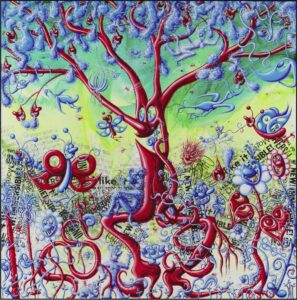
At the Thyssen-Bornemisza Museum, Kenny Scharf’s colourful universe blurs the

Some people look at the world from unexpected perspectives, challenge