Prometeo is a long-standing masthead. In some ways and not without some pride it has an ancient breath. Forty-four years have passed since we first hit the newsstands in the spring of 1983, a span of time that has passed like a panzer division, radically changing the daily lives of individuals and the geographies of the world.
It is even difficult to tell those who are young what Italy and Europe were, to say. And it is equally difficult not to deflect, as they say, from an editorial line that deliberately chooses not to deal with contemporary politics, not even with that critical spirit and expressive talent that characterize our authors.
The difficulty consists precisely in the awareness that in some circumstances even the chronicle is by no means minute: it enforces itself, it imposes itself with lashing energy, it is a turbulence that takes the form of a fatal crossroads, through which nothing will ever be the same again.
And it is true that this is so.
However, we have always thought, and continue to think, that they burden the present with robust information deficiencies and more than obvious cross-fertilizations. Many journals, even of great depth, decided to report news and opinions on the world’s political theaters, which have long undergone permanent fibrillation.
Without detracting from those who choose to throw themselves into the agon, in my view the more serious and perhaps more challenging pact with our readers is instead to intensify the wide-ranging cultural offerings. This is not a matter of mere quantity, it is something more valuable: it is betting on the reader’s ability to make up his or her own mind, thanks to selected content. In the end, and in a world full of aspiring guides, Prometeo stands with a logic of freedom.
That long speech having been made, I hope not idle, a few nods to some of the features in Issue 173.
As is often the case, we are inspired by anniversaries, which in truth are a mere rhetorical device to deal with some theme close to our hearts. One of these, historically very Italian but on closer inspection with worldwide paradigmatic significance, responds to a theme that we can really generalize: how do you build a regime?
It happened a century ago, with the so-called “Fascist Laws” of 1926. To the excellent service by Jacopo Perazzoli should be added a note: our specific iconographic research was fruitless and disappointing, really ad hoc images are not there, not even paid ones.
As readers will be able to see, in the end it was decided to use a kind of typographical lettering, lining up the various pieces of legislation, moreover indicating their date of publication. The first real observation is that a regime, even baritone and exclamation, as in the case of fascism, is actually established with the plodding pace of eternal bureaucracy.
The second is that, nevertheless, perhaps the archives also discount some intentional forgetfulness, say some gentle purging that, in the aftermath of Liberation, streamlined perhaps once copious photographic materials.
And here we come to the article that follows, dedicated to the Nuremberg trial, which ideally closes the circle because it emblematizes the inglorious end of a regime. A historian like Marco Palla, interviewed by Simone Cosimelli, analyzes the concept of crime against humanity, which precisely was on the stand along with the Third Reich. But he also reflects on the “failed Italian Nuremberg,” the boundaries of collective responsibility and what it means to “come to terms with the past.”
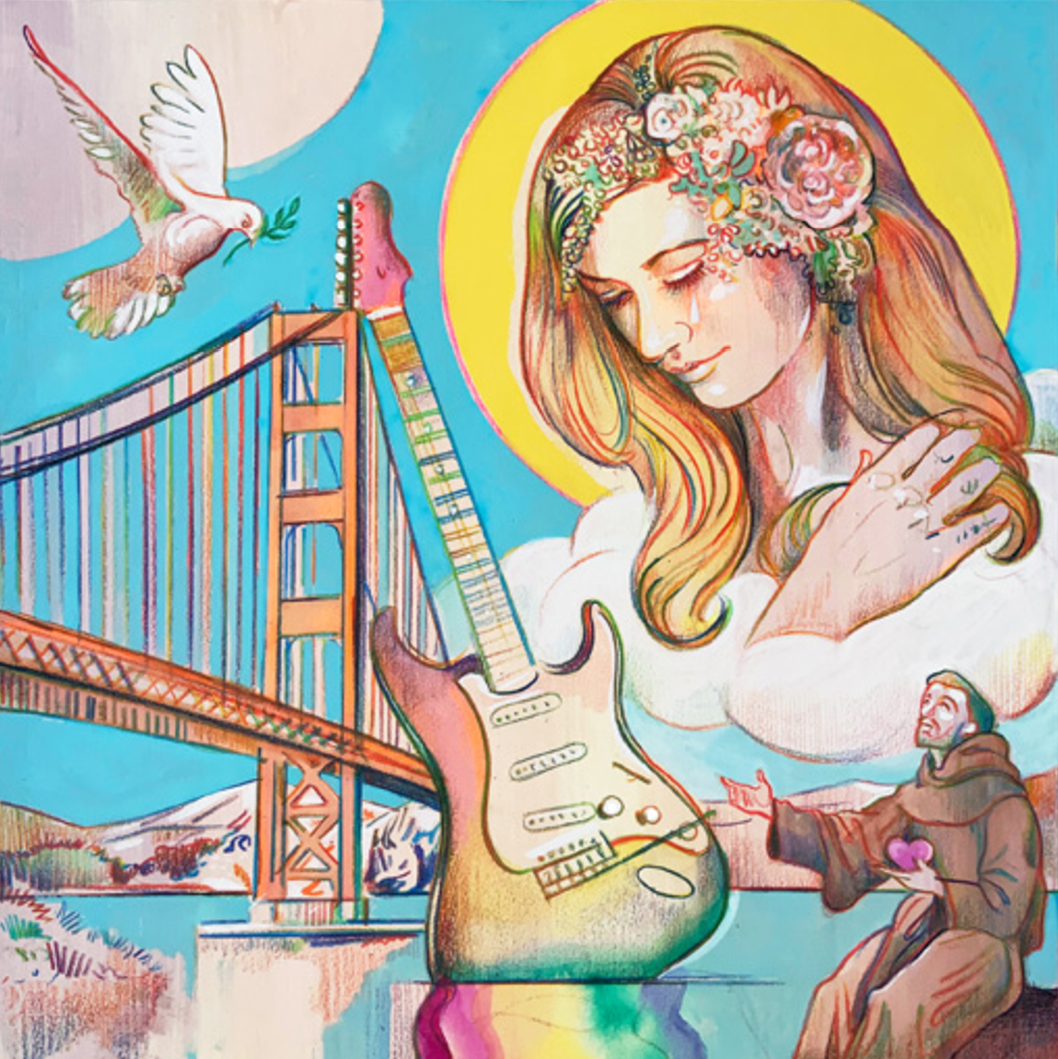
As editorial space is running out, I cannot help but draw everyone’s attention to the issue’s special feature, dedicated to St. Francis of Assisi. No less than five features analyze his luminous figure and impact over the centuries: dense writings, full of insights, I dare to point out that, in this 800th year since his death, and despite the media deluge that has already begun, our crossover is quite unique.
Don’t miss the piece by Ranieri Bizzarri and Clara Frontali: they tell us, with popular taste but also extreme scientific rigor, about “the instant when life appeared” on our planet.
There are many articles, all excellent, I can’t even begin to quote them. If you get to the end of the magazine, pause for a moment also on Bertolt Brecht. The poem “To the Indecisive” remains one of the driest but poignant accounts of his time, which we hope will not return.